Talks were given recently at University of Michigan-Ann Arbor and Georgia Tech. Slides can be downloaded here.
Thursday, November 3, 2016

Sunday, September 4, 2016
Methodology Extension from Stereolithography (SLA) to Selective Laser Melting (SLM)
An initial study of SLM experimental data demonstrates that our prescriptive modeling methodology can be extended to metal based additive manufacturing processes.
Based on four simple test shapes, we can predict the in-plane deformation profile of a freeform shape. Below is the predicted deformation (in solid line) comparing with CMM measurement (red dots). This is a joint study with Prof. Colosimo and Prof. Grasso at Politecnico di Milano.

The plot was generated by PhD student Ms. HE Luan at USC.
Based on four simple test shapes, we can predict the in-plane deformation profile of a freeform shape. Below is the predicted deformation (in solid line) comparing with CMM measurement (red dots). This is a joint study with Prof. Colosimo and Prof. Grasso at Politecnico di Milano.
The plot was generated by PhD student Ms. HE Luan at USC.
Friday, August 5, 2016
Collaboration on Accuracy Control for Selective Laser Melting
Professor Colosimo and Professor Huang have initiated a collaborative effort to control geometric accuracy for Selective Laser Melting (SLM). Initial experimentation and data collection were conducted at Politecnico di Milano (Polimi), where Prof. Huang spent his sabbatical leave in spring 2016.


Professors Grasso, Colosimo, and Huang at Polimi
Monday, July 25, 2016
Talk on "Smart Calibration for Cyber-Physical Additive Manufacturing Systems" at ENS Cachan
Dr. Huang visited LURPA lab at ENS Cachan, France and exchanged research ideas with Dr. Anwer about AM related research such as FACAM and Skin Model Shapes. A talk on "Smart Calibration for Cyber-Physical Additive Manufacturing Systems" was given on July 21, 2016.


Prof. Anwer, Prof. Huang, and Mr. Zhu at LURPA (from left to right)
Monday, July 11, 2016
Talk on Model Transfer - A Joint work with Dr. Arman Sabbaghi
STADIUS Seminar Qiang Huang
Start date: 12/07/2016
Time: 16:00 - 17:00
Location: B02.35
Time: 16:00 - 17:00
Location: B02.35
Title: Model Transfer Through Engineering Effect Equivalence
Abstract
A fundamental issue in science and engineering is whether a model developed in a study under one setting can be successfully transferred and applied to new settings. Bottlenecks to model transfer are introduced by lurking variables, or factors whose levels are completely unobserved due either to negligence, infeasibility of measurement, or insufficient knowledge (Box, 1966). This talk presents a scheme of model transfer based on engineering effect equivalence concept. The total equivalent amount of the lurking variables is represented in terms of an observed base factor with respect to a model feature. Bayesian methodology for modeling the total equivalent amount are developed under this condition. Applications in additive manufacturing are demonstrated.
https://www.esat.kuleuven.be/stadius/event.php?view=1&id=2060
Wednesday, March 16, 2016
Cybermanufacturing Systems (CM) - A New NSF program under CMMI Division
A new NSF program is established for Cybermanufacturing Systems. Our FACAM research could contribute to this area.
| Q. Huang Sabbatical at Politecnico Di Milano |
 | Cybermanufacturing Systems (CM)  CONTACTS 
Apply to PD 16-018Y as follows: For full proposals submitted via FastLane: standard Grant Proposal Guide proposal preparation guidelines apply. For full proposals submitted via Grants.gov: the NSF Grants.gov Application Guide; A Guide for the Preparation and Submission of NSF Applications via Grants.gov Guidelines applies. (Note: The NSF Grants.gov Application Guide is available on the Grants.gov website and on the NSF website at: http://www.nsf.gov/publications/pub_summ.jsp?ods_key=grantsgovguide) Important Information for ProposersA revised version of the NSF Proposal & Award Policies & Procedures Guide (PAPPG) (NSF 16-1), is effective for proposals submitted, or due, on or after January 25, 2016. Please be advised that, depending on the specified due date, the guidelines contained in NSF 16-1 may apply to proposals submitted in response to this funding opportunity.DUE DATES
Full Proposal Accepted Anytime
Proposals submitted to solicitations, such as the CAREER Program, must meet the respective deadlines of those solicitations. SYNOPSIS The Cybermanufacturing Systems (CM) Program supports fundamental research to enable the evolution of a wide range of network-accessed manufacturing services that:
The cybermanufacturing service layer differs from existing Internet services in that it needs an architecture that can incrementally incorporate and organize the rich and deep semantic elements of manufacturing knowledge, requiring an almost unlimited capacity to expand the range and depth of content contributed in the form of partitioned, but interoperating, manufacturing applications. Such efforts are well-suited to incubation in universities, where potential service layer architectures and application modules can be prototyped at low cost, used in coursework and tested by students and faculty. Of particular interest is the exploration of the tradeoffs between generality and tractability in algorithmic representations of manufacturing knowledge. In the classic example, the automation of integrated circuit manufacturing depends on restricting device design options to those that can be produced with 100% reliability by a standardized set of manufacturing processes. As a result, the problem of compiling manufacturing instructions is made tractable by limiting available design options to those that can be manufactured using proven methods. In practice, the considerable design inefficiencies due to such limitations are more than compensated for by the cost savings due to dependable execution. Research areas of interest include, but are not limited to, the following:
Proposals with industry collaborations can be submitted to the CM Program as Grant Opportunities for Academic Liaison with Industry (GOALI) proposals. GOALI proposals have special requirements, as specified in the most recent GOALI solicitation, https://www.nsf.gov/publications/pub_summ.jsp?ods_key=nsf12513. |
Tuesday, January 19, 2016
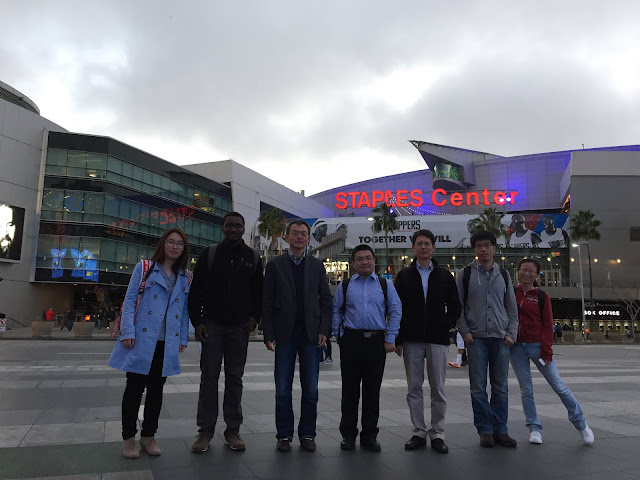
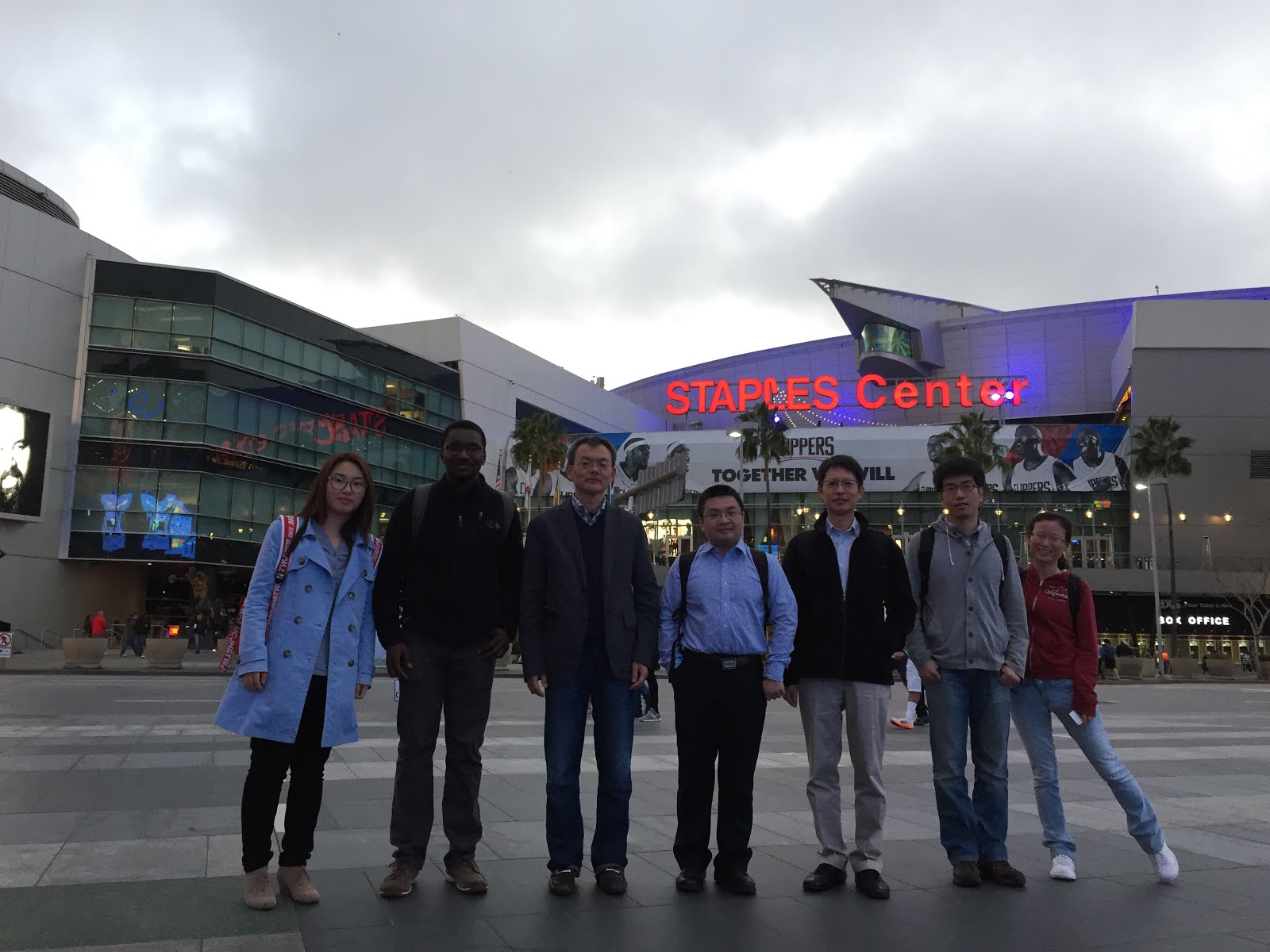
FACAM Workshop Photos
 |
| Prof. Huang (USC) |
 |
| Prof. Chen (USC) |
 | ||||
Prof. Sabbaghi (Purdue)
|


Bambo (Harvard)

Andi (HKUST)

HE (USC)




Thursday, January 7, 2016
Upcoming FACAM 2016 Workshop Agenda - Updated
Theoretical Foundations for Accuracy Control in Additive Manufacturing (FACAM 2016)
USC
January 18th, 2016
Synopsis: Additive Manufacturing (AM) fundamentally changed the premise of quality engineering. This workshop aims to discuss the research needed to establish the theoretical foundations for accuracy control in AM.
Participants
Dr. Qiang Huang, Associate Professor
Gordon S. Marshall Early Career Chair in Engineering
Epstein Department of Industrial and Systems Engineering, USC
Dr. Yong Chen, AssociateProfessor
Epstein Department of Industrial and Systems Engineering, USC
Dr. Fugee Tsung, Professor, Head
Dept. of Industrial Eng & Logistics Mgt
HKUniv. of Science & Technology
Dr. Arman Sabbaghi, Assistant Professor
Department of Statistics
Purdue University
Dr. Matthew Plumlee, Assistant Professor
Dept of Industrial & Operations Engineering
University of Michigan
Dr. Zhijian Pei, Program Director
Manufacturing Machines and Equipment (MME) Program Engineering/CMMI
National Science Foundation
Dr. Hui Wang, Assistant Professor
Industrial & Manufacturing Engineering
Florida State University
Dr. Jun Zeng
Senior Scientist / Engineer at HP Labs
PhD Student Participants:
USC: He Luan, Yuan Jin, Yanqing Duanmu, Ahmed Alzanki
HKUST: Andi Wang
Harvard: Sobambo Sosina
Purdue: Megan Endress, Raquel De Souza Borges Ferreira
Workshop Agenda
Major events
- Jan 18th, 2016: FACAM 2016 Workshop (8:30am - 5:00pm)
Refreshment in the morning and box lunch will be provided
Morning session is open to public for published work and afternoon session is closed to collaborators for on-going research.
- Jan 18th, 2016: Welcome dinner at LA Live (6:00pm)
- Jan 19th, 2016: Dr. Zhijian Pei will give a NSF talk at GER 206 10-11:00 a.m.
Workshop Schedule on Jan 18th, 2016
Morning Session @ GER 206 (8:30-12:00pm)
- Dr. Qiang Huang: Foundation of Optimal Compensation of Three-dimensional Shape Deformation in Additive Manufacturing
- Dr. Yong Chen: High-Precision Additive Manufacturing Processes – Design and Processing Perspective
- Dr. Arman Sabbaghi: Model Building from Small Samples of Disparate Data in 3D Printing
- Dr. Matthew Plumlee: Uncertainty quantification for computational models of physical processes
- Dr. Hui Wang: Effect Equivalence Transformation and Transfer Learning in Engineering Systems
- Dr. Jun Zeng (HP): Fulfillment fidelity challenges in 3D printing and computing and computational research opportunities
Afternoon Session @ GER 206 (1:00-5pm):
- Dr. Matthew Plumlee: Model Uncertainty Quantification of 3D Printing Process
- Sobambo Sosina: Missing Data Treatment of Shape Deformation Modeling
- Dr. Arman Sabbaghi and Dr. Qiang Huang: Transferability of Causal Mechanisms via Equivalent Effects of Lurking Variables
- Andi & Fugee: Predictive Modeling and Compensation of Shape Deviations for Fused Deposition Modeling Processes under Different Printing Parameters.
- Yuan Jin, He Yuan: On-going research on 3D shape deformation modeling and control
Sunday, December 6, 2015
Remaining Issues in "An Analytical Foundation for Optimal Compensation of Three-Dimensional Shape Deformation in Additive Manufacturing"
Optimal Compensation Policy to Reduce Maximum Shape Deformation
Optimal compensation policies established in "An Analytical Foundation for Optimal Compensation of Three-Dimensional Shape Deformation in Additive Manufacturing" satisfy the Minimum Area Deviation (MAD) Criterion or the Minimum Volume Deviation (MAD) Criterion respectively. The polices will reduce the average shape deformation for 2D or 3D shapes.
If maximum shape deformation of a product should be less than a pre-specified value, a MinMax criterion will be more appropriate. However, currently no MinMax optimal compensation policy has been established for 3D shape deformation.
A more complicated case is the combination of MAD and MinMax criteria, which is more realistic for practical case. More research is needed to address the remaining issues left in "An Analytical Foundation for Optimal Compensation of Three-Dimensional Shape Deformation in Additive Manufacturing" (ASME-JMSE, in press).
-QH on 12/06/2015
If maximum shape deformation of a product should be less than a pre-specified value, a MinMax criterion will be more appropriate. However, currently no MinMax optimal compensation policy has been established for 3D shape deformation.
A more complicated case is the combination of MAD and MinMax criteria, which is more realistic for practical case. More research is needed to address the remaining issues left in "An Analytical Foundation for Optimal Compensation of Three-Dimensional Shape Deformation in Additive Manufacturing" (ASME-JMSE, in press).
-QH on 12/06/2015
Monday, November 23, 2015
Journal of Quality Technology: Special Issue on “Quality Engineering in Advanced Manufacturing”
Journal of Quality Technology
Special Issue on “Quality Engineering in
Advanced Manufacturing”
Emergence of advanced manufacturing technologies along
with significant progress in computing and communication has fundamentally transformed
manufacturing to a smart operation scheme that facilitates better management and control of
quality and productivity under a broadly connected and accessible environment. Future manufacturing has increasingly been
characterized as complex, networked cyber-physical systems.
At the product level, complex shapes can be now efficiently manufactured
and product customization allows for short-run or even one-of-a-kind
manufacturing.
At the process level,
smart sensing allows for high-frequency, multi-stream data collection, mixing
signal data to (usually contactless) in-line inspection. At the design level, large-scale
computer experiments can be used to simulate performances of complex products
and processes.
With this dramatic
transformation of manufacturing environment, Quality Engineering, which has a
strong connection with traditional mass production scheme, faces fundamental
challenges. On the other hand, the “data-rich”, dynamic, smart manufacturing environment
also offers tremendous opportunities to develop new-generation methodologies
and techniques to manage and improve quality.
In an attempt to
disseminate cutting-edge developments in quality engineering resulting from the
paradigm shift in manufacturing, the Journal of Quality Technology seeks
submissions for a special issue on “Quality engineering/techniques for advanced
manufacturing” on the following topics:
- · Smart sensing scheme for efficient data collection
- · Non-contact data modeling, monitoring and control
- · Pervasive monitoring and control
- · Data analytics for information capture, representation, extraction, and utilization
- · High fidelity real-time and predictive modeling and simulation of advanced manufacturing processes (e.g., computer experiments design, modeling, calibration and optimization)
- · Robust mathematical models to simulate advanced manufacturing processes and enable complex control algorithms.
- · Design of experiments and statistical quality monitoring for low volume and large product varieties
- · Uncertainty quantification of manufacturing processes using computer experiments
- · Designing efficient experiments to augment information from high-resolution and low-resolution models
- · Complex shapes modeling, monitoring, inspection and optimization
- · Data fusion for quality engineering
Paper Submission
All papers must be prepared in
accordance with the Journal of Quality
Technology standards and guidelines, and will be reviewed following the
regular review process of the journal. Submission of a manuscript implies that
the work has not been published before, and is not currently under
consideration for publication elsewhere.
Authors are required to prepare
a cover letter indicating the submission is for the special issue and to submit
the paper in PDF or MS Word via email to: Valerie Funk, Manuscript Coordinator,
ASQ (Email: manuscripts@asq.org).
Editorial Team:
· Bianca Colosimo (Co-guest Editor), Politecnico
di Milano, Email: biancamaria.colosimo@polimi.it
·
Tirthankar Dasgupta (Co-guest Editor), Harvard University,
Email: dasgupta@stat.harvard.edu
·
Qiang Huang (Co-guest Editor), USC, Email: qiang.huang@usc.edu
·
Fugee Tsung (Editor-in-Chief), Hong Kong
University of Science and Technology, Email: season@ust.hk
Important Dates:
· Aug 31, 2016: Paper submission deadline
·
July 31, 2017: Final decision on paper
acceptance
·
Late 2017 or Early 2018: Publication of the
special issue
Subscribe to:
Posts (Atom)